
Digital Platforms + Renewable Asset Management: How Salesforce is Helping Operators Drive Efficiency

Digital Platforms + Renewable Asset Management: How Salesforce is Helping Operators Drive Efficiency November 13, 2025 11:09 am Adil Gouri Empowering a Sustainable Future: Digital Platforms + Renewable Asset Management: How Salesforce is Helping Operators Drive Efficiency The renewable energy sector is experiencing unprecedented growth, with solar farms, wind turbines, and battery storage facilities popping up across the globe. But here’s the challenge: as operators scale their portfolios, managing thousands of distributed assets becomes exponentially complex. The old way of tracking performance, maintenance schedules, and operational data through spreadsheets and disconnected systems simply doesn’t cut it anymore. Enter digital platforms. Today’s renewable energy operators are discovering that the right technology infrastructure can transform how they monitor, maintain, and maximize the performance of their assets. And the results speak for themselves: reduced downtime, optimized maintenance costs, and significantly improved energy output. The Growing Complexity of Renewable Asset Management Managing renewable energy assets isn’t like managing traditional power plants. We’re talking about geographically dispersed installations, each with hundreds or thousands of individual components that need constant monitoring. A single wind farm might have dozens of turbines, each with its own performance profile, maintenance requirements, and potential failure points. The data challenge alone is staggering. Modern renewable installations generate massive amounts of real-time performance data, weather information, grid connection metrics, and maintenance logs. Without a centralized platform to make sense of all this information, operators are essentially flying blind, reacting to problems instead of preventing them. What’s more, today’s energy markets demand agility. Operators need to respond quickly to changing grid conditions, optimize energy delivery based on market prices, and demonstrate performance to investors and stakeholders. Manual processes and siloed data systems make this nearly impossible. How Digital Platforms are Transforming Operations Digital asset management platforms are changing the game by bringing all operational data into a single, intelligent system. Think of it as a command center that gives operators complete visibility into every asset in their portfolio, no matter where it’s located. These platforms connect directly to the sensors and monitoring systems already installed on renewable assets. They collect performance data in real time, analyze it using advanced algorithms, and surface actionable insights that help operators make better decisions faster. When a wind turbine shows early signs of bearing wear, the system flags it immediately. When solar panel performance drops below expected levels, operators know within minutes, not days. The predictive maintenance capabilities are particularly powerful. Instead of scheduling maintenance based on fixed intervals or waiting for equipment to fail, operators can take a data-driven approach. The platform identifies patterns that indicate potential failures, allowing teams to address issues during planned maintenance windows rather than dealing with costly emergency repairs. Beyond maintenance, digital platforms enable portfolio-wide optimization. Operators can compare performance across sites, identify best practices, and replicate success. They can forecast energy production more accurately, helping with grid planning and revenue projections. And when issues do arise, troubleshooting becomes faster because all the relevant data and historical context is immediately available. Real Results: Efficiency Gains in Action The impact of digital platforms on renewable operations is measurable and significant. Operators who have implemented comprehensive asset management platforms report substantial improvements across multiple metrics. Unplanned downtime typically drops by 20 to 30 percent as predictive maintenance catches issues before they become failures. This directly translates to more uptime and higher energy generation. One solar operator found that early detection of inverter issues alone increased their annual production by nearly 3 percent across their portfolio. Maintenance costs also see notable reductions. By shifting from reactive to predictive maintenance, operators avoid expensive emergency repairs and extend equipment lifespan. Technicians spend less time diagnosing problems because the platform has already identified the likely cause, complete with relevant historical data and recommended solutions. Perhaps most importantly, digital platforms improve decision-making at the strategic level. Portfolio managers can quickly assess which assets are underperforming and why, enabling targeted investments in upgrades or optimization. Financial teams get accurate, real-time data for reporting to investors and lenders. And operations teams can allocate resources more effectively, focusing attention where it’s needed most. Breaking Down Data Silos for Better Collaboration One of the less obvious but equally important benefits of digital platforms is how they improve collaboration across teams. In traditional setups, operations teams work in their systems, maintenance crews have their own tools, and finance uses completely different software. Critical information gets trapped in silos, leading to miscommunication and missed opportunities. A unified digital platform breaks down these barriers. Everyone works from the same data source, ensuring alignment across the organization. When a maintenance technician logs work on a turbine, that information is immediately available to operations managers tracking performance and finance teams monitoring costs. Field teams can access the information they need on mobile devices, updating records in real time rather than filing paperwork later. This connected approach also extends to external stakeholders. Asset owners and investors can access customized dashboards showing portfolio performance. Equipment manufacturers can be given secure access to monitor their products and provide proactive support. The entire ecosystem becomes more efficient when everyone has access to accurate, timely information. The Salesforce Advantage in Renewable Energy Operations So where does Salesforce fit into this picture? Many renewable energy operators are discovering that Salesforce’s platform offers exactly the capabilities they need to manage their increasingly complex operations. Salesforce Energy and Utilities Cloud provides a foundation specifically designed for energy sector needs. It connects operational technology with business systems, creating that crucial single source of truth. Asset performance data flows directly into the same platform managing customer relationships, service operations, and business intelligence. The Service Cloud component becomes the backbone of maintenance operations. Work orders are automatically generated based on performance data or scheduled maintenance needs. Field service technicians get mobile access to asset histories, maintenance procedures, and real-time performance metrics. And because everything is connected, resolving issues becomes faster and more efficient. For portfolio management and analytics, Salesforce’s Einstein AI capabilities bring predictive insights to renewable
From Fragmented Systems to Unified Care: How Smart Integration Is Turning Healthcare’s AI Challenges Into a Multi-Billion Dollar Success Story

AI Revolution Stalled? How Salesforce Supercharges Healthcare’s Digital Leap to $419B Glory AI Revolution Stalled? How Salesforce Supercharges Healthcare’s Digital Leap to $419B Glory October 17, 2025 1:23 pm Himakhi Gogoi The healthcare industry stands at a crossroads. While artificial intelligence promised to transform patient care overnight, many organizations are discovering that adoption is messier than the headlines suggested. Yet amid the growing pains, there’s a $419 billion opportunity taking shape, and the companies getting it right are the ones combining smart technology with practical implementation strategies. If you’re a healthcare executive or IT decision-maker watching your AI investments plateau while competitors seem to be racing ahead, you’re not alone. The good news? The path forward is clearer than you think, and it starts with understanding why the revolution hit the brakes in the first place. The Promise vs. The Reality of Healthcare AI Healthcare was supposed to be AI’s poster child. Predictive diagnostics, personalized treatment plans, automated administrative workflows—the vision was compelling. Organizations invested heavily, expecting rapid transformation. But here’s what actually happened. Most healthcare systems found themselves drowning in disconnected data sources. Patient information lived in one system, billing in another, clinical notes somewhere else entirely. AI models are only as good as the data they’re trained on, and fragmented information creates fragmented results. The initial excitement gave way to frustration. Pilot programs showed promise but struggled to scale. Clinical staff resisted tools that didn’t fit their workflows. Regulatory concerns slowed deployment. The AI revolution didn’t stall because the technology failed. It stalled because implementation was harder than anyone anticipated. Why Healthcare Needs More Than Just AI The healthcare digital transformation market is projected to reach $419 billion, but capturing that value requires more than deploying algorithms. It demands a fundamental rethinking of how technology integrates with care delivery. Think about what healthcare organizations actually need. They need systems that talk to each other seamlessly. They need insights that clinicians can act on immediately, not data they have to interpret. They need tools that reduce administrative burden rather than adding complexity. Most importantly, they need technology that enhances the patient experience while supporting better outcomes. This is where many AI initiatives miss the mark. A brilliant predictive model means nothing if doctors can’t access its insights during patient consultations. An automated scheduling system fails if it doesn’t connect with insurance verification and medical records. The technology has to work within the existing ecosystem, not apart from it. The Data Integration Challenge Nobody Talks About Behind every successful healthcare AI implementation is an unglamorous truth: data integration is the real battleground. Healthcare organizations accumulate information from dozens of sources including electronic health records, imaging systems, laboratory information systems, billing platforms, and increasingly, patient-generated data from wearables and apps. Getting all this information to work together isn’t just a technical challenge. It’s an organizational one. Different departments have different priorities. Legacy systems weren’t built to communicate. Privacy regulations add layers of complexity. And throughout it all, patient care can’t stop while you rebuild the infrastructure. The organizations making progress aren’t necessarily the ones with the most advanced AI. They’re the ones who solved the data problem first. They created unified patient views. They broke down information silos. They built systems where insights flow naturally to the people who need them, when they need them. Where the $419B Opportunity Actually Lives So where is all that value hiding? It’s not in flashy consumer apps or futuristic robot surgeons, though those make better headlines. The real opportunity lies in three core areas that directly impact healthcare’s bottom line and patient outcomes. First, operational efficiency. Healthcare organizations waste enormous resources on administrative tasks, redundant processes, and coordination failures. Technology that streamlines these operations while maintaining care quality delivers immediate ROI. We’re talking about intelligent scheduling that reduces no-shows, automated prior authorizations that save staff hours, and supply chain optimization that cuts costs without compromising care. Second, clinical decision support. Physicians make thousands of decisions daily, often under time pressure with incomplete information. Systems that surface the right insights at the right moment enhance clinical judgment without replacing it. This means flagging potential drug interactions, identifying patients at risk for readmission, or suggesting evidence-based treatment protocols tailored to individual patient characteristics. Third, patient engagement and experience. Healthcare is finally recognizing that patient satisfaction isn’t just nice to have, it’s essential. Digital tools that improve communication, simplify access to care, and empower patients to manage their health create value for everyone. Better engagement leads to better adherence, better outcomes, and better financial performance. How Salesforce Turns Healthcare’s Digital Challenges Into Competitive Advantages This is where platform thinking changes the game. Healthcare organizations don’t need more disconnected point solutions. They need an integrated ecosystem that brings everything together, and Salesforce Health Cloud is purpose-built for exactly this challenge. Salesforce addresses the core problems holding healthcare AI back. Its platform creates a unified view of each patient by connecting data from multiple sources into a single, comprehensive record. Clinical teams see complete patient histories, upcoming appointments, care plans, and communication logs all in one place. This isn’t just convenient, it’s transformative for care coordination. The platform’s AI capabilities, powered by Einstein, work within this integrated environment. That means predictive insights aren’t isolated reports, they’re embedded directly into clinical and administrative workflows. A care coordinator sees which patients are at risk for readmission right within their daily dashboard. Scheduling systems automatically optimize appointment times based on predicted no-show probability and patient preferences. What makes this approach powerful is that it scales. Healthcare organizations can start with specific use cases like patient engagement or care coordination and expand systematically. The underlying platform handles the complex integration work, so teams can focus on improving care delivery rather than wrestling with technical infrastructure. Salesforce also addresses the collaboration challenge that derails so many digital initiatives. Its tools are designed for how healthcare teams actually work, supporting communication between providers, patients, and administrative staff. When everyone operates from the same information
When global disruptions threaten to derail life-saving medical devices, intelligent technology platforms are keeping innovation on track and patients’ hope alive.

MedTech Under Siege: Innovation from Tariffs, Strikes, and Supply Chain Chaos MedTech Under Siege: How Salesforce Rescues Innovation from Tariffs, Strikes, and Supply Chain Chaos October 10, 2025 11:48 am Himakhi Gogoi Your company has a breakthrough medical device ready to change lives. But there’s a problem. New tariffs just made your components 30% more expensive, your supplier can’t guarantee delivery dates, and your support team is down to half its normal size. This isn’t a nightmare scenario. It’s just another Tuesday in medical technology in 2025. The Perfect Storm Hitting Medical Technology Medical technology companies are fighting battles on three fronts simultaneously. Trade wars have made costs unpredictable, with tariffs changing overnight and forcing difficult choices about pricing or finding new suppliers in unfamiliar markets. Global supply chains remain fragile years after pandemic disruptions, with critical components like specialized semiconductors, rare earth materials, and precision-manufactured parts facing extended delays that can push entire product launches back by months. The workforce crisis adds a deeply human dimension to these operational challenges. Major labor actions, exemplified by the 30,000 Kaiser Permanente workers strike, send shockwaves through the healthcare ecosystem. Beyond these visible strikes, medical technology companies struggle daily to find and retain specialized talent in crucial areas like regulatory affairs, clinical research, and technical support. These aren’t positions you can fill quickly with general hires. They require years of specific experience and deep expertise. These challenges create a devastating cascade effect. Delayed components mean missed product launch deadlines. Understaffed customer service teams can’t maintain support quality, damaging relationships with hospitals and clinics. Regulatory submissions slow down because documentation specialists are splitting time across multiple projects instead of focusing on single initiatives. Innovation slows to a crawl precisely when patients need new medical solutions most urgently. Why Innovation Gets Trapped Here’s the frustrating reality that keeps medical technology executives up at night. The industry has never been better positioned to deliver transformative healthcare solutions. Artificial intelligence is enabling earlier disease detection. Connected devices are making remote patient monitoring truly effective. Precision manufacturing is creating implants and prosthetics that work better than ever before. The devices work brilliantly. The clinical data is strong. Patients desperately need these innovations. But operational chaos keeps breakthrough technologies locked in development limbo while external forces beyond anyone’s control dictate timelines and outcomes. Traditional solutions simply aren’t working anymore. Companies tried hiring more people, but specialized talent isn’t available at any reasonable cost. They tried building larger component inventories, but that ties up massive amounts of capital and doesn’t help when tariffs change the economics overnight. They tried diversifying suppliers, but qualifying new vendors for medical-grade components takes months of rigorous validation work. What the industry needs isn’t just more resources or better contingency plans. It needs fundamentally smarter systems that can absorb shocks, adapt quickly to changing conditions, and keep innovation moving forward even when external circumstances are terrible. How Modern Platforms Enable Resilience The medical technology companies thriving despite these challenges share a common characteristic. They’ve invested in integrated technology platforms that give them visibility, control, and flexibility across their entire operation. These aren’t just software tools for managing customer relationships or tracking inventory in spreadsheets. They’re comprehensive ecosystems that connect every part of the business from research and development through manufacturing, regulatory compliance, sales, and customer support into one intelligent system. Think of it like upgrading from a paper map to a real-time GPS navigation system with live traffic updates. When unexpected obstacles appear, the system doesn’t just tell you there’s a problem somewhere ahead. It immediately shows you alternative routes, estimates the impact on your arrival time, and helps you make informed decisions about how to proceed based on current conditions. That’s the kind of operational intelligence medical technology companies need when tariffs hit without warning, suppliers fail to deliver, or workforce challenges emerge suddenly. Where Salesforce Transforms MedTech Operations Salesforce provides medical technology companies with a comprehensive platform that directly tackles each of these challenges while connecting every part of the business into one intelligent, responsive ecosystem. Life Sciences Cloud serves as your operational command center, providing complete visibility across your entire product lifecycle from initial concept through commercialization and beyond. When tariffs hit critical components, the platform immediately flags affected suppliers and products, calculates the financial impact across your portfolio, and enables rapid scenario planning. Product managers can instantly see which development timelines are at risk and reprioritize resources accordingly. Regulatory teams can assess compliance implications across different markets. Sourcing specialists can identify and evaluate alternative suppliers with built-in workflows that track the entire qualification process. Instead of spending weeks gathering information from disconnected systems and endless spreadsheets, companies can respond to major supply chain shocks in days or even hours. Agentforce directly solves the workforce crisis by augmenting stretched human teams with intelligent AI agents that handle substantial portions of routine work across customer service, sales, and internal operations. When a medical device company loses experienced support staff to attrition or labor disputes, Agentforce agents step in seamlessly to handle common technical inquiries, troubleshooting procedures, and product information requests. They work around the clock across multiple languages and channels, providing consistent coverage that would be impossible with human teams alone, especially during workforce shortages. This frees your remaining specialists to focus exclusively on complex cases that truly require human expertise, judgment, and relationship building. On the sales side, these AI agents qualify leads automatically, schedule product demonstrations with healthcare providers, and guide initial product selection conversations. They learn continuously from every interaction, building an ever-growing knowledge base that captures institutional expertise even as individual employees come and go. For medical technology companies struggling with sales team capacity, this means maintaining consistent, professional outreach and responsiveness to potential customers even with skeleton crews. Health Cloud creates the collaboration infrastructure that keeps dispersed, disrupted teams working together effectively despite physical separation or reduced headcount. When workforce shortages mean fewer people trying to accomplish more work, often from different locations due to remote
From Manual to Magical: How FinTech Companies Use Salesforce AI to Transform Collections
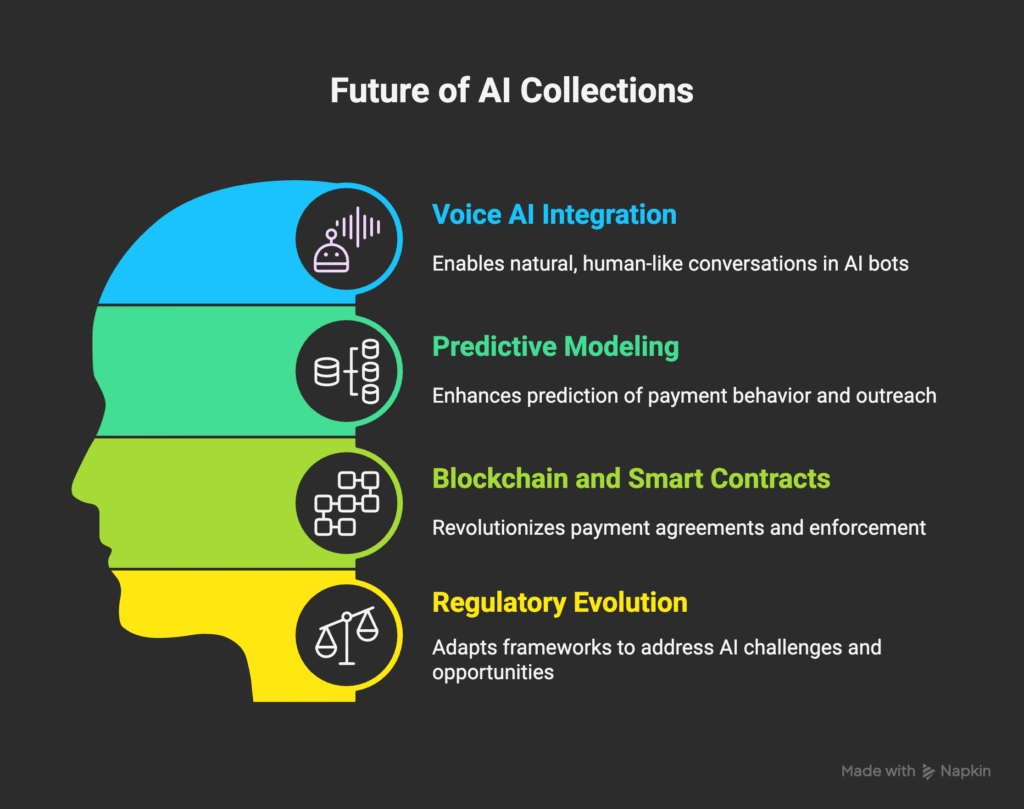
From Manual to Magical: How FinTech Companies Use Salesforce AI to Transform Collections The collections industry is experiencing a seismic shift. While most organizations still rely on human agents making countless phone calls, forward-thinking companies are deploying AI-powered bots that integrate seamlessly with WhatsApp and Salesforce CRM triggers, achieving remarkable cost reductions of up to 40%. The question isn’t whether this transformation will happen—it’s whether your organization will lead or follow. The Current State: Why Manual Collections Are Failing The Human Agent Bottleneck Traditional collections operations are plagued by inefficiencies that seem almost archaic in today’s digital age. Human agents spend hours each day making outbound calls, often reaching voicemails, disconnected numbers, or unresponsive debtors. The average collections agent can only handle 50-80 accounts per day, with success rates hovering around 15-20% for first-contact resolutions. This manual approach creates several critical problems: Scalability Limitations: As portfolios grow, organizations must hire more agents, increasing overhead costs and training complexity. Each new hire requires weeks of training and months to reach full productivity. Inconsistent Messaging: Human agents, despite training, deliver inconsistent messages and may not always follow compliance protocols perfectly. This variability can lead to regulatory issues and damaged customer relationships. Limited Operating Hours: Traditional call centers operate during business hours, missing opportunities to connect with debtors who may only be available during evenings or weekends. High Operational Costs: Between salaries, benefits, training, technology, and facility costs, the total cost per agent can exceed $60,000 annually, not including the productivity losses from sick days, vacation time, and turnover. The Communication Gap Perhaps most critically, traditional collections methods fail to meet modern consumer communication preferences. Studies show that 75% of consumers prefer text-based communication over phone calls, yet most collections operations remain phone-centric. This disconnect creates friction that reduces payment rates and increases customer frustration. The AI Revolution: Transforming Collections Through Intelligent Automation Understanding AI Collections Bots AI collections bots represent a fundamental shift from reactive to proactive collections management. These sophisticated systems leverage natural language processing, machine learning, and integration capabilities to automate the entire collections workflow while maintaining personalization and compliance. Modern AI bots can analyze debtor profiles, payment histories, and behavioral patterns to craft personalized outreach strategies. They understand context, respond to objections, negotiate payment arrangements, and seamlessly escalate complex cases to human agents when necessary. The Power of Multi-Channel Integration The most successful AI collections implementations combine multiple communication channels with robust CRM integration: WhatsApp Business Integration: With over 2 billion users worldwide, WhatsApp has become the preferred communication channel for many consumers. AI bots can initiate conversations, send payment reminders, share payment links, and even process payments directly within the chat interface. Salesforce CRM Triggers: Integration with Salesforce enables sophisticated workflow automation. When specific conditions are met—such as a payment becoming 30 days overdue—the system automatically triggers personalized bot outreach sequences tailored to the debtor’s profile and history. SMS and Email Backup: For comprehensive coverage, AI bots can seamlessly switch between channels based on response rates and customer preferences, ensuring maximum engagement. Real-World Impact: The 40% Cost Reduction Reality Breaking Down the Cost Savings Organizations implementing AI collections bots report average cost reductions of 40%, but understanding where these savings come from reveals the true power of automation: Reduced Labor Costs (60% of savings): AI bots can handle the workload of multiple human agents simultaneously. A single bot can manage thousands of accounts, working 24/7 without breaks, sick days, or vacation time. Increased Collection Rates (25% of savings): By reaching debtors through their preferred communication channels at optimal times, AI bots often achieve higher contact and payment rates than traditional methods. Operational Efficiency (15% of savings): Automated workflows eliminate manual data entry, reduce processing time, and minimize errors, creating significant operational efficiencies. Case Study: Regional Credit Union Success A regional credit union with 50,000 members implemented an AI collections bot integrated with WhatsApp and Salesforce. Within six months, they achieved: 45% reduction in collections operational costs 35% increase in first-contact payment rates 60% reduction in accounts requiring human agent intervention 90% customer satisfaction rate with the bot interaction experience The bot handled over 10,000 collection cases monthly, with human agents focusing only on complex negotiations and legal proceedings. Building Your AI Collections Bot: A Strategic Framework Phase 1: Foundation and Planning Compliance First Approach: Before any technical development, ensure your AI bot framework complies with all relevant regulations including the Fair Debt Collection Practices Act (FDCPA), Telephone Consumer Protection Act (TCPA), and state-specific collection laws. Build compliance into the bot’s core logic, not as an afterthought. Data Integration Strategy: Successful AI collections bots require comprehensive data integration. Connect your existing systems including core banking platforms, loan management systems, payment processors, and customer databases to create a unified view of each debtor’s situation. Communication Channel Setup: Establish your multi-channel communication infrastructure. Set up WhatsApp Business API access, configure SMS gateways, and ensure email deliverability. Each channel requires specific setup and compliance considerations. Phase 2: Salesforce CRM Integration Trigger Configuration: Design sophisticated trigger rules within Salesforce that initiate bot sequences based on specific criteria such as: Days past due thresholds Payment amount and frequency patterns Previous contact history and responses Customer risk scores and segmentation Seasonal or economic factors Workflow Automation: Create automated workflows that update customer records, log interactions, schedule follow-ups, and escalate cases based on bot interactions. This integration ensures seamless handoffs between automated and human processes. Real-Time Sync: Implement real-time data synchronization between your bot platform and Salesforce to ensure agents have immediate access to all bot interactions when they need to intervene. Phase 3: AI Bot Development Natural Language Processing: Develop or integrate NLP capabilities that can understand customer responses, detect payment intent, identify hardship situations, and respond appropriately. The bot should handle common scenarios like payment confirmations, dispute notifications, and arrangement requests. Personalization Engine: Build dynamic message generation capabilities that personalize communications based on customer data, payment history, and previous interactions. Personalized messages consistently outperform generic templates. Payment Integration: Integrate secure payment processing directly
Salesforce Field Sales & Order Management

Salesforce CRM & CPQ Implementation

Salesforce Sales Cloud + Pardot Implementation

Salesforce Sales Cloud Implementation

Salesforce Billing + Experience Cloud Implementation

Optimizing Field Operations for AquaFlow Utilities

Optimizing Field Operations for AquaFlow Utilities Optimizing Field Operations for AquaFlow Utilities Industry: Utilities March 7, 2025 admin 10:09 am Challenge:AquaFlow Utilities needed to streamline their field operations and reduce response times for service requests. Their existing system was fragmented and lacked real-time visibility. Solution:We deployed Salesforce Field Service to enhance field team coordination and efficiency. We developed a mobile app for field agents to access work orders and update statuses in real-time. Predictive analytics were integrated to anticipate high-demand periods and allocate resources proactively. Results: 45% faster response times to service requests. Improved resource allocation, reducing overtime costs by 20%. Increased customer satisfaction scores by 25%. Client Testimonial: “Optimumvalue delivered a seamless solution that improved our field operations and customer satisfaction. Highly recommend their services!” — Karen Thompson, COO, AquaFlow Utilities
