
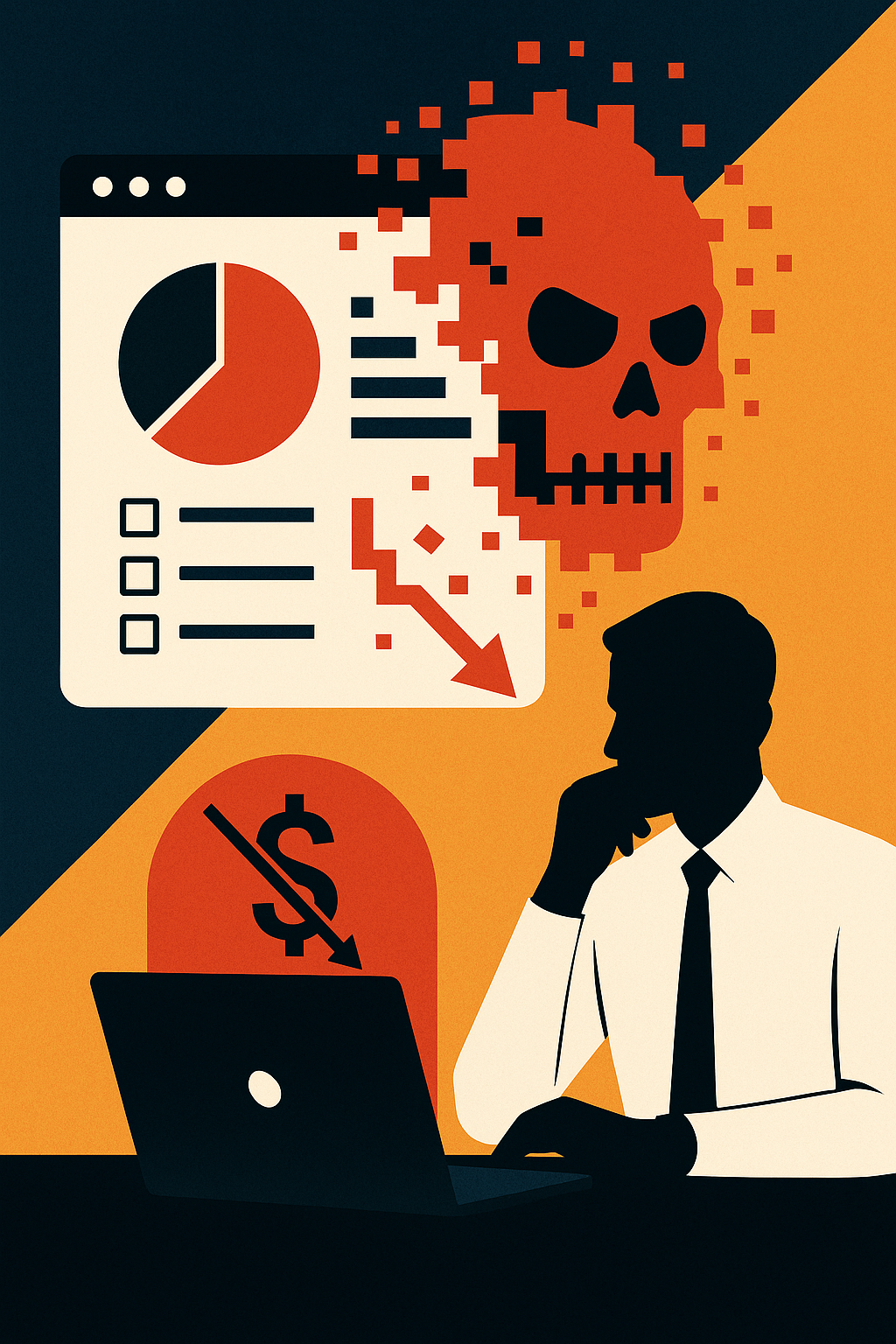
Picture this: Your FinTech is humming along, processing thousands of applications daily, when suddenly your risk models start flagging legitimate customers as high-risk while approving questionable loans. Your conversion rates plummet, defaults spike, and your compliance team is pulling their hair out. What went wrong?
The culprit is often hiding in plain sight: bad data. In an industry where split-second decisions can make or break profitability, the quality of your data isn’t just important—it’s everything. Yet a staggering 60% of FinTechs are still relying on manual onboarding processes or broken APIs that feed garbage into their decision engines.
When your data foundation is shaky, every business-critical decision built on top of it becomes a gamble. Let’s dive into how poor data quality is silently sabotaging FinTech operations and what you can do about it.
The Scale of the Problem: Why FinTechs Are Drowning in Bad Data
The numbers don’t lie. While traditional banks have had decades to refine their data processes, many FinTechs are growing so fast they’re duct-taping solutions together. Manual data entry, inconsistent API integrations, and rushed implementations create a perfect storm of data quality issues.
Consider what happens during a typical customer onboarding process. Information flows from multiple sources: credit bureaus, bank statements, identity verification services, and customer-provided data. Each touchpoint is an opportunity for errors to creep in—from simple typos to systemic integration failures.
The result? Clean, actionable data becomes the exception rather than the rule. And in FinTech, bad data doesn’t just sit quietly in a database—it actively makes decisions that affect your bottom line.
How Bad KYC Data Turns Compliance Into a Nightmare
Know Your Customer (KYC) processes are your first line of defense against fraud and regulatory violations. But when KYC data is incomplete, outdated, or just plain wrong, it creates cascading problems throughout your entire operation.
Bad KYC data manifests in several ways:
- Incomplete customer profiles that leave gaps in risk assessment
- Outdated information that doesn’t reflect current customer circumstances
- Inconsistent data formats across different verification sources
- False positives that flag legitimate customers as suspicious
- Missing red flags that should trigger additional scrutiny
When your KYC foundation is compromised, you’re not just risking regulatory penalties—you’re making it harder to serve legitimate customers while potentially opening doors to bad actors. The ripple effects touch everything from customer experience to operational costs.
The Risk Scoring Catastrophe: When Models Make Wrong Calls
Risk scoring models are only as good as the data they consume. Feed them bad information, and they’ll confidently make terrible decisions—often at scale.
Here’s where things get particularly painful. Modern FinTechs rely on sophisticated algorithms that weigh hundreds of data points to assess creditworthiness and fraud risk. These models are incredibly powerful when they have clean, consistent inputs. But introduce data quality issues, and they become expensive liability generators.
Common data problems that wreck risk scoring include:
- Income data inconsistencies leading to incorrect affordability assessments
- Employment verification gaps that skew stability calculations
- Credit history inaccuracies that misrepresent payment behavior
- Identity verification errors that create false fraud signals
- Transaction data anomalies that trigger unnecessary alerts
The cruel irony is that the more sophisticated your risk models become, the more vulnerable they are to data quality issues. A single corrupted data field can throw off an entire risk calculation, leading to approved loans that should be declined or rejected applications from your best customers.
Lead Quality Degradation: When Marketing Meets Reality
Your marketing team celebrates a successful campaign that generated thousands of leads. Your sales team starts working them, only to discover that half the contact information is wrong, the demographic data doesn’t match your target profile, and the lead scores are based on incomplete information.
This scenario plays out daily in FinTechs where data quality issues affect lead generation and qualification processes. When customer data is inconsistent or inaccurate from the moment someone enters your funnel, it creates friction at every subsequent touchpoint.
Poor lead data quality typically results in:
- Wasted sales resources on unqualified prospects
- Incorrect personalization that damages customer experience
- Skewed conversion metrics that mislead strategy decisions
- Higher customer acquisition costs due to inefficient targeting
- Reduced trust in data-driven marketing initiatives
The hidden cost here isn’t just the immediate inefficiency—it’s the long-term erosion of confidence in your data systems across the organization.
Underwriting Logic Gone Wrong: The Domino Effect
Underwriting is where all your data streams converge to make the ultimate decision: approve or decline. It’s also where bad data does its most expensive damage.
Modern underwriting systems process applications in real-time, evaluating everything from credit scores to bank transaction patterns. When the underlying data is flawed, these systems make decisions that look rational on the surface but are fundamentally unsound.
The domino effect of bad underwriting data includes:
- False approvals that increase default rates and erode profitability
- Unnecessary declines that reduce conversion and alienate good customers
- Inconsistent decisions that create compliance and fairness issues
- Model drift as algorithms learn from corrupted training data
- Regulatory scrutiny when decision patterns don’t align with stated policies
Perhaps most dangerous is the feedback loop effect. When bad data leads to poor underwriting decisions, and those decisions generate new data points, the system essentially trains itself to make progressively worse choices.
The Business Impact: More Than Just Numbers
The cumulative effect of bad data goes beyond individual transactions or customer interactions. It fundamentally undermines your ability to run a data-driven business.
Consider the broader implications:
- Strategic decisions based on flawed analytics lead to misallocated resources
- Regulatory compliance becomes reactive rather than proactive
- Customer trust erodes when experiences don’t match expectations
- Operational efficiency suffers as teams spend time fixing data issues
- Competitive advantage diminishes when competitors have cleaner data processes
In FinTech, where margins are often thin and competition is fierce, these impacts can quickly become existential threats rather than mere operational inconveniences.
How Salesforce Can Transform Your Data Foundation
Here’s where platforms like Salesforce can fundamentally change the game for FinTechs struggling with data quality issues. Rather than treating data management as a technical afterthought, Salesforce provides a comprehensive ecosystem designed specifically for data-driven financial services.
The Salesforce Financial Services Cloud offers several key advantages:
Data Integration and Standardization: Salesforce’s robust API ecosystem and pre-built connectors can eliminate the manual processes and broken integrations that plague many FinTechs. Instead of cobbling together multiple point solutions, you get a unified platform that standardizes data formats and ensures consistency across all touchpoints.
Real-time Data Quality Monitoring: Built-in data quality tools can automatically identify and flag inconsistencies, duplicates, and anomalies before they contaminate your decision engines. This proactive approach prevents bad data from entering your systems rather than trying to clean it up after the damage is done.
Compliance and Audit Trails: Salesforce maintains comprehensive audit trails and compliance frameworks that are essential for KYC and regulatory requirements. This means your data governance isn’t just about quality—it’s about demonstrating that quality to regulators and auditors.
AI-Powered Insights: Salesforce Einstein can help identify patterns in your data that human analysts might miss, including potential data quality issues that could affect risk scoring and underwriting decisions.
By centralizing customer data, transaction history, risk assessments, and compliance documentation in a single, governed platform, Salesforce helps FinTechs move from reactive data management to proactive data strategy. The result is not just cleaner data, but data that actively drives better business outcomes.
Taking Action: Your Path to Data-Driven Excellence
The message is clear: in FinTech, bad data isn’t just an inconvenience—it’s a business-critical vulnerability that affects everything from customer experience to regulatory compliance. The companies that recognize this reality and invest in proper data foundations will have a sustainable competitive advantage over those that continue patching broken processes.
The solution isn’t about perfection—it’s about creating systems and processes that consistently deliver clean, actionable data at the speed your business demands. Whether through comprehensive platforms like Salesforce or other enterprise solutions, the key is treating data quality as a strategic priority rather than a technical afterthought.
Your customers, your compliance team, and your bottom line will thank you for it.

Why 70%+ CRM Projects Fail…
Why 70%+ CRM Projects Fail — And How Next-Gen Architecture Changes Outcomes January 15, 2026…

Hyper-Personalization as a Competitive Advantage…
Hyper-Personalization as a Competitive Advantage in 2026 January 14, 2026 1:40 pm Adil Gouri Retail…

Salesforce’s Next Frontier: Agentic AI…
Salesforce’s Next Frontier: Agentic AI & Self-Executing Workflows January 14, 2026 11:50 am Darpan Karanje…
