
Digital Lending 2025 (India): Compliant Growth Under RBI’s New Directions
Compliance is the New Growth Hack And Salesforce is Your Engine. Digital Lending 2025 (India): Compliant Growth Under RBI’s New Directions August 20, 2025 10:37 pm Akash Yadav The digital lending landscape in India just got a major overhaul. With RBI issuing the Digital Lending Directions 2025 on May 8, 2025, every digital lender now faces a critical challenge: how do you scale credit operations while staying fully compliant with the most comprehensive regulatory framework India has ever seen? The answer lies not in choosing between growth and compliance, but in redesigning your entire product and platform architecture to make compliance a competitive advantage. The companies that master this integration will dominate the next decade of digital lending in India. The New Reality: Compliance as Core Architecture The 2025 Directions are not just regulatory updates—they represent a fundamental shift in how digital lending must operate. The Chief Compliance Officer (CCO) of each Regulated Entity is now accountable for certifying that all digital lending workflows comply with DLG 2025, making compliance a board-level responsibility that cannot be treated as an afterthought. This means your technology stack, product design, and business processes must be built with compliance at the core, not bolted on as an external layer. The companies that understand this shift early will have a massive advantage over those trying to retrofit compliance into existing systems. Breaking Down the New Framework: What Every Digital Lender Must Know Regulated Entities and Scope The 2025 Directions apply to all commercial banks, primary cooperative banks, state cooperative banks, central cooperative banks, all non-banking financial companies including housing finance companies, and all-India financial institutions. If you are lending digitally in India, these rules apply to you. Default Loss Guarantee: The 5% Cap Revolution The most immediate impact comes from the DLG framework. DLG cover is now capped at 5% of the disbursed portfolio and must be in the form of cash, fixed deposits, or bank guarantees. This fundamentally changes how Lending Service Providers (LSPs) can structure their partnerships with banks and NBFCs. Key implications: No revolving credit or credit card DLGs are permitted DLG must be invoked within 120 days of default unless repaid Once invoked, a guarantee cannot be reinstated For digital lending platforms, this means you need robust systems to: Track DLG utilization in real-time across your portfolio Automate DLG invocation within the 120-day window Maintain separate accounting for different portfolio segments Ensure your underwriting does not rely on DLG as a substitute for proper risk assessment LSP Governance: The New Accountability Framework LSPs can no longer collect fees directly from borrowers; REs must compensate them separately. This creates a complete restructuring of revenue flows in digital lending partnerships. Importantly, LSPs are now under RBI oversight through their contractual arrangements with REs. This means if you are an LSP, your compliance posture directly impacts your banking partners’ regulatory standing. The operational changes required: Complete separation of customer-facing fees from LSP compensation Transparent fee structures that cannot be bundled or hidden Clear contractual frameworks that define compliance responsibilities Joint liability structures between REs and LSPs for regulatory violations CIMS Registration: Your Ticket to Legitimacy All REs must report their Digital Lending Apps on RBI’s CIMS portal by June 15, 2025. The RBI will make this list publicly accessible, allowing users to verify app legitimacy. This is not just a reporting requirement—it is a fundamental shift toward transparency that will reshape customer trust and market dynamics. REs are responsible for the accuracy and timely submission of this information, which will be published by RBI without further validation. The strategic implications: Apps not registered on CIMS will lose customer trust and face regulatory action Public visibility means reputational risks are amplified Accuracy of reporting becomes critical as errors will be publicly visible Chief Compliance Officers must certify the accuracy of DLA data on CIMS portal The Cooling-Off Period: Redefining Customer Experience Borrowers now have a “cooling-off period”, determined by the RE’s board with a minimum of one day, to exit loans without penalties except a nominal processing fee. This seemingly simple requirement creates complex operational challenges. Your platform must now handle: Dynamic cooling-off periods based on different REs’ board decisions Automated loan cancellation processes Refund mechanisms for disbursed amounts Clear communication of cooling-off rights to customers Systems to prevent LSPs from charging fees during this period Key Metrics for Compliant Growth: What to Track To scale successfully under the new framework, you need to monitor compliance metrics alongside business metrics. Here are the critical KPIs: Complaint Rate Metrics Customer complaints per 1000 loans disbursed Resolution time for complaints Complaint categories trending analysis LSP vs direct RE complaint ratios Mis-selling Detection Flags Loan approval to complaint correlation Product complexity vs customer profile mismatches Excessive fee structures detection Inappropriate target customer segments NPA Performance by Channel Direct RE channels vs LSP channel NPA rates DLG invocation frequency by LSP Portfolio performance within the 5% DLG cap Time to default analysis by acquisition channel Approval TAT (Turnaround Time) Compliance End-to-end approval times including cooling-off periods System downtime impact on approval processes Compliance check delays in approval workflows Customer drop-off rates during compliance processes Product and Compliance Co-Design: The Winning Strategy The most successful digital lenders in 2025 will be those that redesign their products with compliance as a core feature, not a constraint. This means: Embedded Compliance Workflows Real-time DLG utilization tracking in loan origination systems Automated cooling-off period management Integrated KYC and customer verification processes Built-in fee transparency and disclosure mechanisms Transparent Pricing Architecture Clear separation of RE fees and LSP compensation Automated fee calculation and disclosure Dynamic pricing based on regulatory requirements Customer-friendly fee explanations and comparisons Risk Management Integration DLG-conscious underwriting models Real-time portfolio monitoring for regulatory limits Automated early warning systems for compliance breaches Integrated stress testing for different regulatory scenarios Platform Changes: Technical Architecture for Compliance Your technology platform needs fundamental changes to support compliant growth: Data Architecture Updates Separate data streams for customer fees and LSP compensation Real-time regulatory reporting capabilities
BNPL is Evolving: What Comes After Pay Later?
Next-Gen FinTech Starts Here BNPL is Evolving: What Comes After Pay Later? BNPL is Evolving: What Comes After Pay Later? August 8, 2025 12:13 pm Kartik Chopade The Buy Now, Pay Later (BNPL) revolution seemed like it happened overnight. One day we were fumbling for credit cards, the next we were splitting purchases into bite-sized installments with a few taps on our phones. But here’s the thing about revolutions – they don’t stop evolving. The BNPL landscape is shifting again, and this time it’s getting personal. Really personal. We’re moving from the one-size-fits-all “pay in 4” model to something far more sophisticated: Personalized Pay Paths. The Problem with Generic BNPL Traditional BNPL solutions treat all customers the same. Whether you’re buying a $50 pair of shoes or a $2,000 laptop, you get the same payment structure. It’s like giving everyone the same prescription glasses – sure, some people might see better, but most are still squinting. This generic approach creates friction for both businesses and customers: High-value purchases often need longer payment terms Repeat customers deserve better flexibility than first-time buyers Different income cycles (weekly, bi-weekly, monthly) require different payment schedules Shopping behavior patterns vary dramatically across customer segments Enter the New Wave: CRM + AI = Smart Payment Journeys The next generation of BNPL platforms is cracking this code by combining two powerful technologies: Customer Relationship Management (CRM) data and Artificial Intelligence. Here’s how it works: Instead of offering everyone the same “4 payments over 6 weeks” option, these smart platforms analyze individual customer data to create tailored payment journeys. They look at purchase history, payment behavior, income patterns, and even seasonal spending habits to craft payment plans that actually make sense for each person. Real-World Example Imagine Sarah, a freelance designer who gets paid monthly, and Mike, a retail worker who gets paid weekly. Traditional BNPL would offer them identical payment schedules. But with personalized pay paths: Sarah gets monthly installments aligned with her freelance payment cycle Mike gets weekly micro-payments that match his paycheck schedule Both get payment amounts optimized for their spending capacity and history The Technology Behind the Magic CRM Integration: The Data Foundation Modern BNPL platforms are integrating deeply with business CRM systems to access rich customer profiles. This includes: Purchase history and frequency Average order values and seasonal patterns Customer lifetime value calculations Communication preferences and engagement data Return and refund patterns AI-Powered Personalization Machine learning algorithms process this CRM data to: Predict optimal payment schedules based on individual cash flow patterns Calculate personalized credit limits using holistic customer profiles Identify the best communication cadence for payment reminders Suggest upsell opportunities at the right moments in the payment journey Better Engagement Through Personalization This isn’t just about making payments more convenient – it’s about creating fundamentally better customer relationships. For Customers Reduced financial stress: Payment schedules that align with actual income cycles Higher approval rates: AI considers more factors than traditional credit scoring Flexible adjustments: Plans that adapt to changing circumstances Proactive communication: Reminders and updates delivered when and how customers prefer them For Businesses Lower default rates: Payment plans matched to customer capacity reduce missed payments Increased conversion: More customers can afford purchases with personalized terms Higher customer lifetime value: Better payment experiences drive repeat purchases Improved cash flow predictability: AI helps forecast payment patterns more accurately The Competitive Advantage Companies implementing personalized pay paths are seeing impressive results: 25-40% reduction in payment defaults compared to generic BNPL 15-30% increase in average order values Higher customer satisfaction scores and Net Promoter Scores Improved operational efficiency through automated, intelligent payment management What This Means for Your Business If you’re currently using traditional BNPL solutions, it might be time to evaluate next-generation alternatives. The businesses that will thrive in the evolving payments landscape are those that treat each customer as an individual, not a demographic. Look for BNPL partners that offer: Deep CRM integration capabilities AI-driven personalization engines Flexible payment structure options Advanced analytics and reporting White-label customization options The Future is Personal We’re moving toward a world where every aspect of the shopping experience adapts to individual preferences and circumstances. Payments are no exception. The question isn’t whether personalized pay paths will become the standard – it’s how quickly your business will adopt them. Because in a world where customers have endless choices, the companies that understand them as individuals, not just credit scores, will be the ones that win their loyalty and their wallets. Latest Post 08Aug Blogs BNPL is Evolving: What Comes… Next-Gen FinTech Starts Here BNPL is Evolving: What Comes After Pay Later? BNPL is Evolving:… 07Aug Blogs The $30 Billion ‘Hidden Profit’… Next-Gen FinTech Starts Here The $30 Billion ‘Hidden Profit’ Layer in FinTech — And How… 07Aug Blogs The Million-Dollar Mistake: Why FinTechs… Next-Gen FinTech Starts Here From Spreadsheet Chaos to Smart CRM: Why FinTechs Can’t Afford to…
The $30 Billion ‘Hidden Profit’ Layer in FinTech — And How CRM AI is Unlocking It
Next-Gen FinTech Starts Here The $30 Billion ‘Hidden Profit’ Layer in FinTech — And How CRM AI is Unlocking It The $30 Billion ‘Hidden Profit’ Layer in FinTech — And How CRM AI is Unlocking It August 7, 2025 2:17 pm Darpan Karanje Picture this: Your fintech company has thousands of customers using your core product, but you’re only capturing a fraction of their potential value. Meanwhile, your competitors are quietly building deeper relationships and higher lifetime values with similar customer bases. The difference? They’ve discovered the hidden profit layer that sits between customer acquisition and churn. This isn’t speculation. Recent industry analysis suggests there’s approximately $30 billion in unrealized revenue sitting dormant across fintech companies worldwide — money that’s hidden in plain sight within existing customer relationships. The key to unlocking it lies in combining behavioral data with intelligent CRM automation to drive strategic cross-selling and maximize customer lifetime value. If you’re a decision-maker in fintech, this represents one of the most significant growth opportunities available today. Here’s how smart companies are capitalizing on it. What Exactly Is This ‘Hidden Profit Layer’? The hidden profit layer refers to the untapped revenue potential within your existing customer base. Most fintech companies excel at acquiring customers for their primary product — whether that’s a payment processor, lending platform, or investment app. But they often miss the goldmine of additional services these same customers would gladly purchase. Consider a typical scenario: A small business signs up for your payment processing solution. They’re happy with the service, but you never discover they also need invoice management, expense tracking, or business loans. Meanwhile, they’re purchasing these services from your competitors, often at higher prices than you could offer. The hidden profit layer emerges when you: Identify cross-sell opportunities early in the customer journey Understand behavioral patterns that indicate readiness to buy Deliver personalized recommendations at the right moment Automate follow-up sequences that nurture interest into purchases Research shows that acquiring a new customer costs 5-25 times more than selling to an existing one. Yet most fintech companies allocate 80% of their resources to acquisition and only 20% to expansion. This imbalance represents massive missed opportunities. How Behavioral Data Reveals Customer Intent Your customers are constantly sending signals about their needs, interests, and purchasing intent. The challenge is recognizing and acting on these signals before competitors do. Behavioral data in fintech context includes: Transaction Patterns: How often customers use your service, average transaction sizes, seasonal variations, and spending categories can reveal unmet needs. A customer processing high-volume B2B payments might need cash flow management tools. Product Usage Depth: Customers who fully utilize your core features are prime candidates for complementary services. Someone maximizing your budgeting tools might be ready for investment products. Support Interactions: The questions customers ask support teams often reveal pain points that additional products could solve. Frequent inquiries about multi-currency support might indicate international expansion needs. Platform Engagement: Time spent in different app sections, feature adoption rates, and content consumption patterns provide insights into customer priorities and interests. External Indicators: Credit score changes, business growth signals, or life events (detected through permissioned data sources) can trigger relevant product recommendations. The magic happens when you analyze these data points collectively rather than in isolation. A customer showing increased transaction volume, exploring advanced features, and asking about integration options is displaying classic expansion signals. The Role of CRM AI in Unlocking Value Traditional CRM systems excel at organizing customer information, but they’re reactive by nature. You enter data, create tasks, and hope your team follows up appropriately. CRM AI transforms this dynamic by making your customer relationship management proactive and predictive. Here’s how AI-powered CRM automation drives results: Predictive Scoring: AI algorithms analyze behavioral patterns to assign expansion scores to each customer. Instead of guessing who might be interested in additional products, you get data-driven prioritization of your best opportunities. Automated Trigger Campaigns: When customers exhibit specific behaviors, AI can automatically initiate personalized outreach sequences. A customer who starts processing international payments might receive targeted information about foreign exchange services. Dynamic Content Personalization: AI customizes email content, app recommendations, and product suggestions based on individual customer profiles and behaviors. This increases relevance and conversion rates significantly. Optimal Timing Intelligence: AI identifies the best times to approach each customer with cross-sell opportunities, maximizing the likelihood of positive responses while avoiding over-communication. Conversation Intelligence: AI can analyze support tickets, sales calls, and customer communications to identify sentiment, extract needs, and recommend next best actions for account managers. The result is a CRM system that doesn’t just store customer information — it actively identifies opportunities and orchestrates the right interactions at the right time. Real-World Impact: The Numbers Don’t Lie Companies implementing AI-driven CRM strategies in fintech are seeing remarkable results: Cross-sell conversion rates increase by 40-60% when recommendations are based on behavioral triggers rather than broad market segments Customer lifetime value grows by an average of 35% within the first year of implementation Time to revenue expansion decreases from months to weeks as automated systems identify and nurture opportunities faster than manual processes Account manager productivity improves by 50% as AI handles routine identification and initial outreach, allowing humans to focus on high-value relationship building One mid-sized payment processor implemented behavioral AI and discovered that customers who used their mobile app more than 10 times per month were 4x more likely to adopt additional financial products. By automatically triggering personalized campaigns for these high-engagement users, they increased their average revenue per customer by 42% in eight months. Implementation Strategy: Where to Start Successfully unlocking your hidden profit layer requires a systematic approach: Phase 1: Data Foundation Start by auditing your current data collection and ensuring you’re capturing meaningful behavioral signals. This might require updating your tracking infrastructure or integrating new data sources. Phase 2: AI Integration Choose CRM AI tools that align with your existing tech stack and can process fintech-specific behavioral patterns. Look for solutions that offer pre-built models for financial services rather than
The Million-Dollar Mistake: Why FinTechs Still Running on Spreadsheets Will Lose in 2025

Next-Gen FinTech Starts Here From Spreadsheet Chaos to Smart CRM: Why FinTechs Can’t Afford to Ignore Salesforce in 2025 The Million-Dollar Mistake: Why FinTechs Still Running on Spreadsheets Will Lose in 2025 August 7, 2025 6:06 am Preeti Yadav Picture this: Your fintech startup just closed another funding round, your user base is exploding, and your team is scrambling to keep up with customer inquiries scattered across emails, Slack threads, and yes, that dreaded master spreadsheet that somehow became your customer database. Sound familiar? You’re not alone. As we move deeper into 2025, fintech companies are facing an uncomfortable truth: the scrappy, bootstrap methods that got them to Series A won’t cut it for sustainable growth. While traditional financial institutions lumber forward with legacy systems, agile fintechs have a golden opportunity to leapfrog the competition with smart customer relationship management. The question isn’t whether you need a proper CRM system. It’s whether you can afford to keep running your growing business on digital sticky notes and prayer. The Hidden Cost of Spreadsheet Management Let’s talk numbers for a moment. Your average fintech employee spends roughly 2.5 hours per day hunting for customer information across different platforms. Multiply that by your team size, then by your hourly rates, and you’re looking at thousands of dollars in lost productivity every single week. But the real damage goes deeper than time costs. When your customer success manager can’t quickly access a client’s transaction history during a support call, or when your sales team loses track of warm leads because they’re buried in an Excel file someone forgot to update, you’re not just losing efficiency. You’re losing trust, deals, and ultimately, competitive advantage. The financial services industry is built on trust and relationships. Every fumbled interaction, every delayed response, every “let me get back to you on that” chips away at the professional image you’ve worked so hard to build. Why Traditional CRMs Fall Short for FinTechs Here’s where many fintech leaders make their first mistake: they assume any CRM will solve their problems. They grab the first affordable solution they find, set it up over a weekend, and wonder why adoption rates are dismal six months later. Generic CRMs weren’t designed for the unique challenges of financial technology companies. They can’t handle complex compliance requirements, struggle with multi-layered approval processes, and offer little insight into the customer financial journey that’s so crucial for fintech success. Consider these fintech-specific pain points: Regulatory compliance tracking across multiple jurisdictions Integration with payment processors and banking APIs Real-time fraud monitoring and risk assessment Complex customer onboarding workflows with KYC requirements Multi-stakeholder deals involving banks, regulators, and end users Your basic CRM treats a customer as a customer. But in fintech, you need to understand whether someone is a retail user, institutional client, compliance officer, or integration partner, and tailor your entire relationship management strategy accordingly. The Salesforce Advantage: Built for Complex Growth This is where Salesforce changes the game entirely. Unlike one-size-fits-all solutions, Salesforce was designed from the ground up to handle complex business relationships and intricate sales cycles. For fintech companies, this translates into several game-changing advantages. Advanced Integration Capabilities Salesforce doesn’t just store customer data; it becomes the central nervous system of your entire operation. Through its robust API ecosystem, you can seamlessly connect your payment processors, compliance tools, risk management systems, and customer support platforms into one unified view. Imagine having real-time transaction data, compliance status, support ticket history, and sales pipeline information all accessible from a single dashboard. Your team can finally see the complete customer picture without jumping between systems. Customizable Workflows for Financial Services Every fintech has unique processes, and Salesforce’s workflow automation capabilities let you codify your business logic directly into your CRM. Whether you need multi-stage approval processes for enterprise deals or automated compliance alerts based on transaction patterns, Salesforce can handle the complexity. This isn’t just about saving time; it’s about ensuring consistency and reducing human error in processes where mistakes can have serious regulatory and financial consequences. Scalability That Grows With You Perhaps most importantly for fast-growing fintechs, Salesforce scales seamlessly from startup to enterprise. The same system that manages your first 100 customers can handle 100,000 without requiring a complete overhaul of your processes. As you expand into new markets, launch additional products, or acquire other companies, Salesforce adapts to your evolving needs rather than constraining your growth. Real-World Impact: What Success Looks Like Let’s get practical about what this transformation actually means for your day-to-day operations. Your sales team stops losing deals because they now have complete visibility into each prospect’s engagement history, technical requirements, and decision-making timeline. They can prioritize leads based on actual data rather than gut instinct. Your customer success team can proactively identify at-risk accounts by analyzing usage patterns, support ticket trends, and payment behaviors all within a single platform. Instead of reacting to churn, they’re preventing it. Your compliance team gets automated alerts about regulatory changes affecting specific customers, ensuring you stay ahead of requirements rather than scrambling to catch up during audits. Most importantly, your leadership team finally has reliable forecasting data. You can make strategic decisions based on actual pipeline metrics, customer lifetime value calculations, and market trend analysis instead of educated guesses. Making the Transition: Overcoming Implementation Hurdles The biggest barrier to CRM adoption isn’t technical; it’s human. Your team has found workarounds for existing chaos, and change feels risky when you’re moving fast and breaking things. Successful Salesforce implementations for fintechs follow a few key principles: Start with your most painful process first. Don’t try to digitize everything at once. Pick the workflow that causes the most daily frustration and nail that implementation before moving to the next challenge. Involve your team in the design process. The people who will use the system daily should have input into how it’s configured. This builds buy-in and ensures the final setup actually matches how work gets done. Plan for integration from day one. Your CRM shouldn’t
FinTech’s Silent Killer Bad Data, Worse Decisions

Next-Gen FinTech Starts Here The Hidden Enemy of Every FinTech: Bad Data in, Bad Decisions Out FinTech’s Silent Killer Bad Data, Worse Decisions August 5, 2025 5:43 am Sneha Pal Picture this: Your FinTech is humming along, processing thousands of applications daily, when suddenly your risk models start flagging legitimate customers as high-risk while approving questionable loans. Your conversion rates plummet, defaults spike, and your compliance team is pulling their hair out. What went wrong? The culprit is often hiding in plain sight: bad data. In an industry where split-second decisions can make or break profitability, the quality of your data isn’t just important—it’s everything. Yet a staggering 60% of FinTechs are still relying on manual onboarding processes or broken APIs that feed garbage into their decision engines. When your data foundation is shaky, every business-critical decision built on top of it becomes a gamble. Let’s dive into how poor data quality is silently sabotaging FinTech operations and what you can do about it. The Scale of the Problem: Why FinTechs Are Drowning in Bad Data The numbers don’t lie. While traditional banks have had decades to refine their data processes, many FinTechs are growing so fast they’re duct-taping solutions together. Manual data entry, inconsistent API integrations, and rushed implementations create a perfect storm of data quality issues. Consider what happens during a typical customer onboarding process. Information flows from multiple sources: credit bureaus, bank statements, identity verification services, and customer-provided data. Each touchpoint is an opportunity for errors to creep in—from simple typos to systemic integration failures. The result? Clean, actionable data becomes the exception rather than the rule. And in FinTech, bad data doesn’t just sit quietly in a database—it actively makes decisions that affect your bottom line. How Bad KYC Data Turns Compliance Into a Nightmare Know Your Customer (KYC) processes are your first line of defense against fraud and regulatory violations. But when KYC data is incomplete, outdated, or just plain wrong, it creates cascading problems throughout your entire operation. Bad KYC data manifests in several ways: Incomplete customer profiles that leave gaps in risk assessment Outdated information that doesn’t reflect current customer circumstances Inconsistent data formats across different verification sources False positives that flag legitimate customers as suspicious Missing red flags that should trigger additional scrutiny When your KYC foundation is compromised, you’re not just risking regulatory penalties—you’re making it harder to serve legitimate customers while potentially opening doors to bad actors. The ripple effects touch everything from customer experience to operational costs. The Risk Scoring Catastrophe: When Models Make Wrong Calls Risk scoring models are only as good as the data they consume. Feed them bad information, and they’ll confidently make terrible decisions—often at scale. Here’s where things get particularly painful. Modern FinTechs rely on sophisticated algorithms that weigh hundreds of data points to assess creditworthiness and fraud risk. These models are incredibly powerful when they have clean, consistent inputs. But introduce data quality issues, and they become expensive liability generators. Common data problems that wreck risk scoring include: Income data inconsistencies leading to incorrect affordability assessments Employment verification gaps that skew stability calculations Credit history inaccuracies that misrepresent payment behavior Identity verification errors that create false fraud signals Transaction data anomalies that trigger unnecessary alerts The cruel irony is that the more sophisticated your risk models become, the more vulnerable they are to data quality issues. A single corrupted data field can throw off an entire risk calculation, leading to approved loans that should be declined or rejected applications from your best customers. Lead Quality Degradation: When Marketing Meets Reality Your marketing team celebrates a successful campaign that generated thousands of leads. Your sales team starts working them, only to discover that half the contact information is wrong, the demographic data doesn’t match your target profile, and the lead scores are based on incomplete information. This scenario plays out daily in FinTechs where data quality issues affect lead generation and qualification processes. When customer data is inconsistent or inaccurate from the moment someone enters your funnel, it creates friction at every subsequent touchpoint. Poor lead data quality typically results in: Wasted sales resources on unqualified prospects Incorrect personalization that damages customer experience Skewed conversion metrics that mislead strategy decisions Higher customer acquisition costs due to inefficient targeting Reduced trust in data-driven marketing initiatives The hidden cost here isn’t just the immediate inefficiency—it’s the long-term erosion of confidence in your data systems across the organization. Underwriting Logic Gone Wrong: The Domino Effect Underwriting is where all your data streams converge to make the ultimate decision: approve or decline. It’s also where bad data does its most expensive damage. Modern underwriting systems process applications in real-time, evaluating everything from credit scores to bank transaction patterns. When the underlying data is flawed, these systems make decisions that look rational on the surface but are fundamentally unsound. The domino effect of bad underwriting data includes: False approvals that increase default rates and erode profitability Unnecessary declines that reduce conversion and alienate good customers Inconsistent decisions that create compliance and fairness issues Model drift as algorithms learn from corrupted training data Regulatory scrutiny when decision patterns don’t align with stated policies Perhaps most dangerous is the feedback loop effect. When bad data leads to poor underwriting decisions, and those decisions generate new data points, the system essentially trains itself to make progressively worse choices. The Business Impact: More Than Just Numbers The cumulative effect of bad data goes beyond individual transactions or customer interactions. It fundamentally undermines your ability to run a data-driven business. Consider the broader implications: Strategic decisions based on flawed analytics lead to misallocated resources Regulatory compliance becomes reactive rather than proactive Customer trust erodes when experiences don’t match expectations Operational efficiency suffers as teams spend time fixing data issues Competitive advantage diminishes when competitors have cleaner data processes In FinTech, where margins are often thin and competition is fierce, these impacts can quickly become existential threats rather than mere operational inconveniences. How Salesforce
AI Is Not the Future — It’s Already Disrupting Loan Underwriting (with Real Stats)
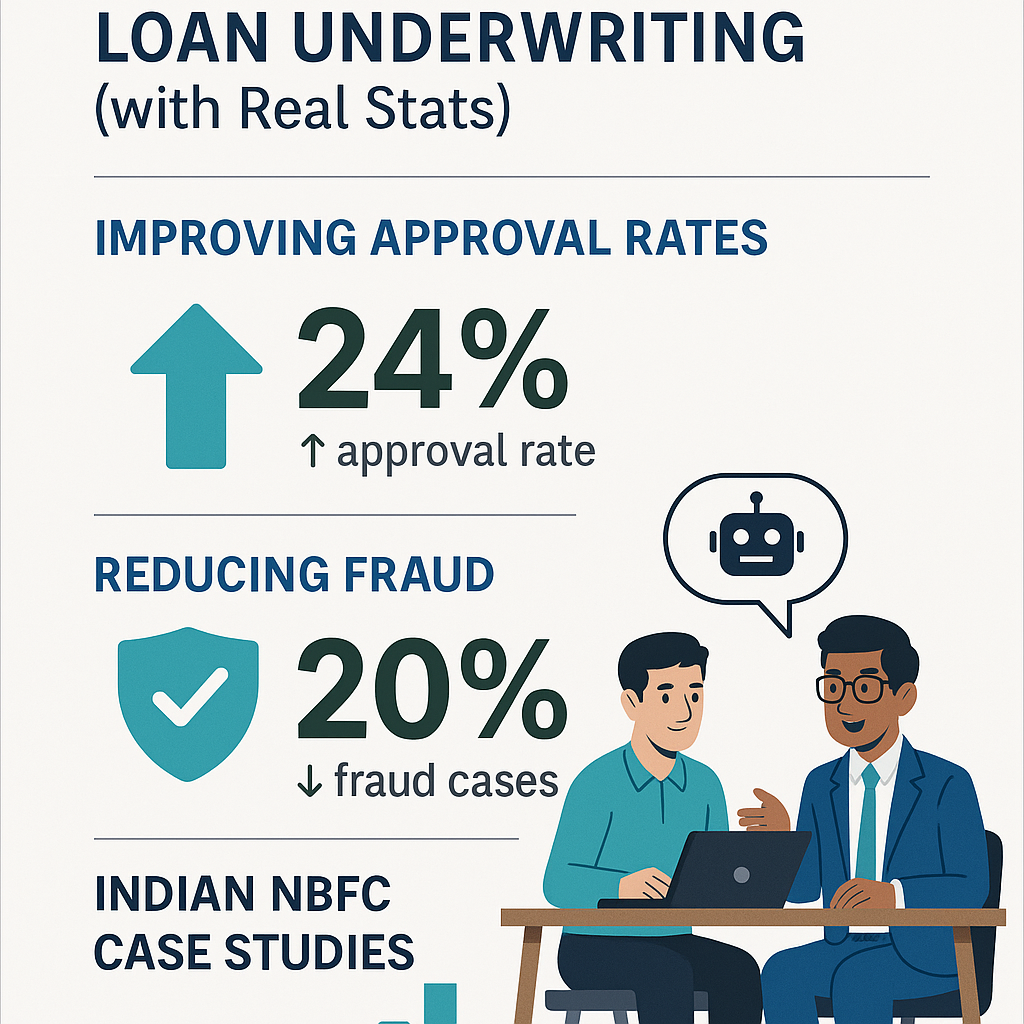
Next-Gen FinTech Starts Here The AI Lending Revolution: Faster, Smarter, Fairer AI Is Not the Future — It’s Already Disrupting Loan Underwriting (with Real Stats) August 4, 2025 2:22 pm Himanshu Sahay Picture this: A small business owner in Pune applies for a loan at 2 PM on a Tuesday. By 4 PM that same day, they receive approval, complete with personalized terms tailored to their specific risk profile. No endless paperwork. No weeks of waiting. No human bias in the decision-making process. This isn’t a glimpse into some distant future—it’s happening right now across India’s financial landscape. AI has moved from boardroom buzzword to operational reality, fundamentally transforming how lenders assess risk, approve loans, and protect themselves from fraud. The numbers tell a compelling story: 62% of executives recognize artificial intelligence/machine learning technology (AI/ML) is elevating underwriting quality and reducing fraud, and the results are already visible in the bottom line. The Traditional Underwriting Problem: Slow, Expensive, and Often Wrong For decades, loan underwriting has been a bottleneck in the lending industry. Traditional methods rely heavily on manual processes, limited data points, and human judgment—a combination that creates several pain points: Manual credit assessment can take days or weeks, leading to frustrated customers and lost business opportunities. Human underwriters, despite their expertise, can only process a fraction of the applications that AI systems handle daily. More concerning is the consistency issue—two underwriters might reach different conclusions about the same applicant. Traditional systems also struggle with thin-file applicants—people with limited credit history who might be creditworthy but don’t fit conventional scoring models. In India, where a significant portion of the population lacks extensive credit records, this limitation has historically excluded millions from accessing formal credit. How AI Is Revolutionizing Loan Underwriting Today Lightning-Fast Decision Making AI systems can analyze hundreds of data points in seconds, dramatically reducing approval times. What once took days now happens in minutes. This speed isn’t just about convenience—it’s about competitive advantage. Lenders who can provide instant decisions capture more customers and improve their market position. Enhanced Risk Assessment Through Alternative Data Modern AI systems don’t just look at traditional credit scores. They analyze smartphone usage patterns, utility payment histories, social media behavior, and transaction patterns to create a comprehensive risk profile. This approach has proven particularly effective in emerging markets like India, where traditional credit data might be limited. Significant Cost Reduction Automation eliminates much of the manual labor involved in underwriting. AI can shorten claims processing time by 30%, ensuring that policyholders receive their settlements quickly and reducing the administrative burden on insurers. While this statistic relates to insurance, similar efficiency gains are seen in loan processing. Real Statistics: The Impact Is Measurable The transformation isn’t just theoretical—the numbers prove AI’s effectiveness: Fraud Detection Improvements: AI systems excel at identifying suspicious patterns that humans might miss. By analyzing vast datasets and recognizing subtle correlations, these systems can flag potentially fraudulent applications with remarkable accuracy. Approval Rate Optimization: improved risk assessment models leading to a reduction in losses by up to 15%. This improvement comes from AI’s ability to identify creditworthy applicants who might be rejected by traditional systems, while simultaneously catching higher-risk applications that might otherwise slip through. Processing Efficiency: The shift from manual to automated processes has reduced operational costs significantly while improving consistency in decision-making. Indian NBFC Success Stories: AI in Action Case Study 1: Digital Transformation at Scale Findings indicate that AI has reached that tipping point in India, particularly in the NBFC-P2P lending space. Several Indian NBFCs have successfully implemented AI-driven underwriting systems, resulting in faster loan disbursals and improved risk management. Case Study 2: Addressing Over-Indebtedness Concerns The Indian lending landscape faces unique challenges. As of September 2024, 8% of borrowers had active loans from four or more lenders, a sharp rise from 3.6% in 2021. AI systems help NBFCs identify these over-leveraged borrowers by cross-referencing multiple data sources and providing a more complete picture of an applicant’s financial obligations. Case Study 3: Serving the Underserved Many Indian NBFCs focus on financial inclusion, extending credit to previously underserved segments. AI enables these institutions to assess risk more accurately for applicants with limited formal credit history by leveraging alternative data sources like mobile phone usage, utility payments, and digital transaction patterns. The Technology Behind the Transformation Machine Learning Models At the heart of AI underwriting are sophisticated machine learning algorithms that continuously learn and improve. These models analyze historical loan performance data to identify patterns that predict repayment likelihood. Natural Language Processing AI systems can analyze unstructured data like customer communications, social media posts, and even voice patterns during phone conversations to assess creditworthiness and detect potential fraud. Real-Time Data Integration Modern AI platforms integrate data from multiple sources in real-time, including bank statements, GST returns, utility bills, and even psychometric assessments, creating a comprehensive applicant profile. Overcoming Implementation Challenges While the benefits are clear, implementing AI in underwriting isn’t without challenges: Data Quality and Availability: AI systems are only as good as the data they process. Ensuring clean, relevant, and up-to-date data feeds is crucial for accurate decision-making. Regulatory Compliance: Financial institutions must navigate complex regulatory requirements while implementing AI systems. Ensuring transparency and explainability in AI decisions is becoming increasingly important. Change Management: Transitioning from traditional underwriting to AI-driven processes requires significant organizational change, including staff training and process redesign. Looking Ahead: The Future Is Now The transformation of loan underwriting through AI isn’t a future possibility—it’s today’s reality. Financial institutions that haven’t started their AI journey risk being left behind as competitors offer faster, more accurate, and more inclusive lending solutions. The key to success lies in choosing the right technology partners and platforms that can seamlessly integrate with existing systems while providing the flexibility to evolve with changing market needs. How Salesforce Can Accelerate Your AI Underwriting Journey For organizations looking to implement or enhance their AI underwriting capabilities, Salesforce Financial Services Cloud offers a comprehensive platform that addresses the entire lending lifecycle. Integrated Customer
Everyone Wants Real-Time Financial Health Scoring — But Nobody’s Getting It Right
Next-Gen FinTech Starts Here Cracking the Credit Scoring Code Everyone Wants Real-Time Financial Health Scoring — But Nobody’s Getting It Right August 1, 2025 11:38 am Sangavi Singh In today’s hyper-connected financial landscape, every FinTech wants to be the company that finally cracks the code on real-time borrower assessment. The promise is tantalizing: instant decisions, reduced risk, happier customers, and competitive advantage. Yet despite billions invested in AI and analytics, most financial institutions are still making lending decisions with outdated tools and fragmented data. The problem isn’t a lack of data. With UPI processing over 640 million daily transactions in India alone, behavioral insights from CRM systems, and rich transaction histories, there’s more financial data than ever before. The real challenge is that these data streams exist in silos, like having all the pieces of a puzzle scattered across different rooms. The Broken Promise of Traditional Credit Scoring Traditional credit scoring feels increasingly outdated in our digital-first world. A credit bureau score based on historical data from months or years ago tells you very little about someone’s current financial health or future ability to repay. Consider this scenario: A freelance graphic designer has an excellent payment history but took a hit during a slow quarter six months ago. Their traditional credit score reflects that rough patch, but their current UPI transactions show steady client payments, responsible spending patterns, and growing income streams. Traditional scoring systems miss this recovery entirely. This disconnect creates two major problems: For lenders: False positives and negatives lead to lost revenue and increased defaults. Good borrowers get rejected while risky ones slip through. For borrowers: Qualified individuals face unnecessary friction, while others receive credit they cannot handle, leading to financial stress. The Data Goldmine Sitting in Silos Most FinTechs are sitting on a treasure trove of insights, but these insights are trapped in disconnected systems: UPI Transaction Data Every digital payment tells a story. Transaction frequency, merchant categories, timing patterns, and spending consistency provide real-time insights into income stability and financial behavior. Yet this data rarely flows into lending decisions in real-time. CRM Behavioral Patterns Customer relationship management systems capture how borrowers interact with financial services. Response times to notifications, app usage patterns, communication preferences, and engagement levels all signal financial stress or stability before it shows up in traditional metrics. Income Verification Challenges Most lenders still rely on static documents like salary slips or bank statements. But in a gig economy where income varies monthly, these snapshots provide limited insight into actual earning capacity or future stability. The result? Lending decisions based on incomplete pictures, leading to suboptimal outcomes for everyone involved. How Next-Generation FinTechs Are Building Real-Time Intelligence Forward-thinking financial companies are moving beyond traditional approaches by creating unified data ecosystems that connect previously isolated information streams. Dynamic Transaction Pattern Analysis Instead of waiting for monthly statements, leading FinTechs analyze transaction patterns in real-time: Cash flow timing: Regular salary deposits vs. irregular freelance payments Spending categories: Essential expenses vs. discretionary purchases Transaction velocity: Frequency and consistency of financial activity Merchant analysis: Types of businesses and services being paid This approach reveals financial health trends weeks or months before they appear in traditional credit reports. Behavioral Risk Modeling Advanced systems now incorporate behavioral analytics to understand customer financial habits: Stress indicators: Changes in app usage during financial pressure Communication patterns: Response rates to payment reminders and notifications Digital engagement: Interaction with financial education content or budgeting tools Social proof signals: Consistency across digital touchpoints These behavioral signals often predict financial distress more accurately than historical payment data alone. Real-Time Income Verification Modern income verification goes beyond static documents: Live bank statement analysis: Using Account Aggregator frameworks for real-time financial data Pattern recognition: Identifying salary, freelance, and business income streams automatically Expense ratio calculations: Understanding spending patterns relative to income Seasonal adjustments: Recognizing and accounting for income variations Unified Risk Scoring Architecture The technical breakthrough comes from API-first infrastructure that creates unified data lakes ingesting information from: UPI transaction APIs for real-time payment data Account Aggregator feeds for comprehensive financial pictures CRM interaction logs for behavioral insights External data sources for additional context validation This architecture enables real-time risk scoring that updates continuously rather than monthly or quarterly. The Competitive Advantage of Getting It Right Companies successfully implementing real-time financial health scoring are seeing significant benefits: Reduced Default Rates: Real-time verification systems can reduce fraud risks by 60-80% by cross-referencing multiple data points instantly. Faster Decision Making: Automated systems provide lending decisions in minutes rather than days, improving customer experience and operational efficiency. Better Risk Assessment: Dynamic scoring models identify both opportunities and risks that traditional systems miss, leading to more profitable lending portfolios. Customer Satisfaction: Borrowers appreciate quick decisions and feel understood when their current financial situation is accurately reflected in lending decisions. Implementation Challenges and Solutions Building real-time financial health scoring isn’t without obstacles: Data Privacy and Compliance: Handling real-time financial data requires robust security measures and regulatory compliance. Solution: Implement privacy-by-design architectures with strong encryption and audit trails. Integration Complexity: Connecting multiple data sources with different formats and update frequencies is technically challenging. Solution: Use standardized APIs and middleware platforms designed for financial data integration. Model Accuracy: Real-time models must balance speed with accuracy to avoid poor lending decisions. Solution: Implement continuous learning systems that improve with each transaction and outcome. How Salesforce Can Transform Financial Health Scoring Salesforce’s ecosystem presents unique opportunities to address the real-time financial health scoring challenge through its comprehensive platform approach. Customer 360 for Financial Services Salesforce’s Customer 360 platform can serve as the unified data layer that FinTechs desperately need. By integrating UPI transaction data, CRM behavioral patterns, and income verification into a single customer view, financial institutions can finally break down the data silos that limit current scoring approaches. The platform’s real-time processing capabilities enable instant updates to customer profiles as new financial data flows in, creating the dynamic scoring models that next-generation FinTechs require. AI and Analytics Integration Einstein AI can analyze the complex
Next-Gen FinTech Starts Here Future. Faster. UPI 3.0 July 30, 2025 7:14 am Akash Yadav Why Every FinTech Startup in India Is Betting Big on UPI 3.0 — And What You’re Missing Picture this scenario: A small business owner in Bengaluru applies for a loan at 10 AM, gets instant approval by 10:05 AM, and starts spending the credit line through UPI by 10:10 AM. No paperwork, no branch visits, no waiting for weeks. This is not a futuristic dream—this is happening right now, and it is reshaping how India thinks about credit, lending, and financial services. India is now home to 28 fintech unicorns, ranking third globally behind the US and China, and almost every single one of them is doubling down on UPI 3.0 capabilities. But what exactly is driving this massive shift, and why are startups betting their entire business models on this evolution? The UPI Revolution That Started It All UPI transformed payments in India by making digital transactions as simple as sending a text message. From processing a handful of transactions in 2016 to handling billions of transactions monthly, UPI became the backbone of India’s digital economy. But payments were just the beginning. NPCI started introducing new features under UPI 3.0 from 2024, including “Conversational Voice Payments” unveiled at the Global Fintech Fest 2024, marking a significant advancement in transaction convenience. However, the real game-changer lies not in how we pay, but in how UPI 3.0 is revolutionizing lending, credit scoring, and customer onboarding. The Credit Line Revolution: Instant Money at Your Fingertips The most significant development in UPI 3.0 is the Credit Line on UPI feature. This product empowers individuals and small businesses to obtain pre-sanctioned credit lines from banks, which can be utilized immediately for transactions through UPI. Think of it as having a pre-approved credit card that works seamlessly with UPI payments. Here is how the process works in practice: Users open a UPI app, go to the Credit or Loan section, select the ‘Credit Line option’, enter required personal and financial information, and complete KYC verification. What previously took weeks now happens in minutes. This capability is transforming how FinTech startups approach lending. Instead of building separate loan applications and payment systems, they can now offer instant credit that integrates directly with India’s most popular payment method. The result is a seamless user experience that removes friction from both borrowing and spending. Micro-Lending Gets a Major Upgrade UPI 3.0 is particularly revolutionary for micro-lending startups. Traditional micro-lending involved extensive paperwork, physical verification, and lengthy approval processes. The new UPI infrastructure changes this completely. India has launched a digital credit assessment system for MSMEs with UPI-based lending, replacing traditional collateral with transaction-based assessments. This means that small businesses can now access credit based on their UPI transaction history rather than traditional collateral or credit scores. For FinTech startups, this opens up massive opportunities. They can now offer: Instant micro-loans based on UPI transaction patterns Credit lines that activate automatically when users need them Small business loans that get approved based on payment volumes Consumer credit that adapts to spending behavior The addressable market is enormous. Small businesses and individual entrepreneurs who were previously excluded from formal credit systems can now access funding instantly through platforms they already use daily. Instant Credit Scoring: The Data Goldmine Perhaps the most exciting aspect of UPI 3.0 for FinTech startups is the treasure trove of transaction data it provides for credit scoring. Traditional credit scoring in India relied heavily on formal banking relationships and credit card usage, excluding millions of people with limited banking history. UPI transaction data tells a completely different story. It reveals: Regular income patterns through salary credits and recurring payments Spending behavior across different categories Business cash flows for merchants and service providers Financial discipline through savings and investment patterns Social connections through peer-to-peer transactions FinTech startups are building sophisticated algorithms that can assess creditworthiness within minutes using this UPI transaction data. A street vendor who receives consistent UPI payments can now qualify for business loans. A young professional with regular UPI-based salary credits can access instant personal loans without a lengthy credit history. The competitive advantage is clear: startups that master UPI-based credit scoring can approve loans faster, assess risk more accurately, and serve previously underbanked populations. KYC Automation: The Silent Game Changer Customer onboarding has always been a pain point for FinTech startups. Traditional KYC processes involved document submissions, manual verification, and regulatory compliance checks that could take days or weeks. UPI 3.0 changes this equation dramatically. As per April 2021 RBI directive, after March 31, 2022, all KYC compliant digital wallets became interoperable using the UPI system. This interoperability means that KYC verification done for one UPI-enabled service can be leveraged across multiple platforms. For FinTech startups, this translates to: Instant customer verification using existing UPI KYC data Reduced onboarding friction and higher conversion rates Lower compliance costs and faster regulatory approvals Seamless integration with banking partners who are already UPI-enabled The automation possibilities are endless. A customer who is already KYC-verified on one UPI app can instantly access services from multiple FinTech partners without repeating the verification process. The Platform Play: Why Infrastructure Matters M2P Fintech serves as a solution for enabling credit line functionality on UPI with their unified credit stack, empowering financial institutions with flexible lending solutions across various channels. This highlights how FinTech startups are not just building consumer-facing applications but also creating the infrastructure that enables UPI 3.0 capabilities. The smartest FinTech startups are positioning themselves as enablers rather than just service providers. They are building: API platforms that help traditional banks offer UPI-based credit White-label solutions for smaller financial institutions Credit scoring engines that can be licensed to multiple lenders KYC automation tools that serve the entire ecosystem This platform approach creates multiple revenue streams and reduces dependency on any single business model. Market Dynamics: The Numbers Tell the Story The India Fintech Market is expected to reach USD 44.12 billion in 2025 and
